2026 Production Ready

Automated Discrete Gas Sampling for CRDS & Laser Analyzers

The SAM Gas Autosampler automates high-precision greenhouse gas and stable isotope analysis (CO2, CH4, N2O, δ13C, δ15N, δ18O). Designed for Cavity Ring-Down Spectroscopy with 150-vial capacity, continuous non-stop loading, and zero costly proprietary modules.

150 Sample Vial Capacity
< 0.5% Sample Carryover
Non-Stop Continuous Vial Loading
SAM Gas Autosampler Current Version

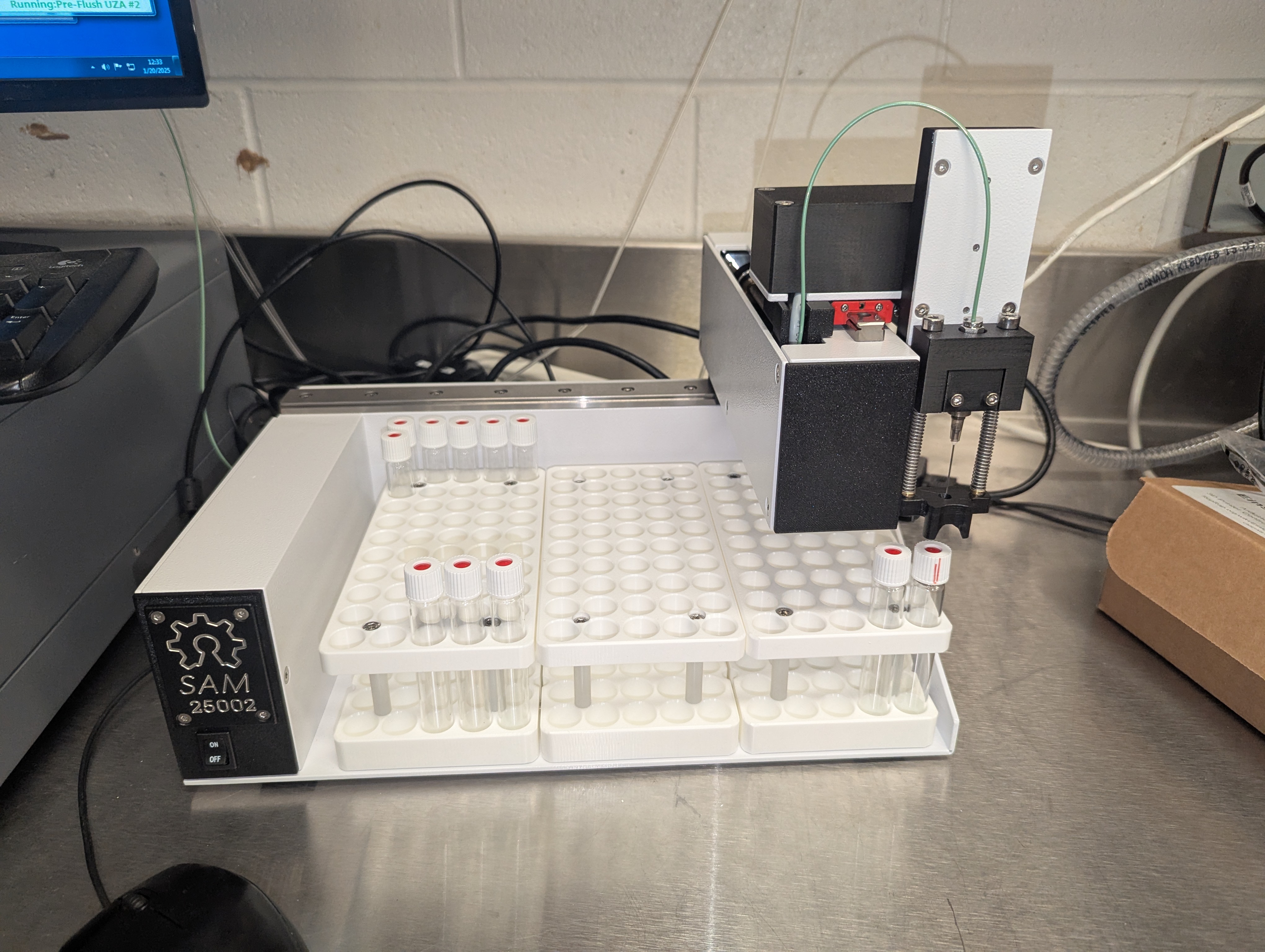
SAM Gas Autosampler

Model 2026 • 150-Tray • Einsy RAMBo

Ready

Why Researchers Choose SAM

Maximizing productivity of your gas analyzer, overcoming the limitations of high-cost proprietary injection modules, complex gas chromatographs, and error-prone manual syringe injections.

The Proven Pioneer in 24/7 Automated Discrete Gas Analysis

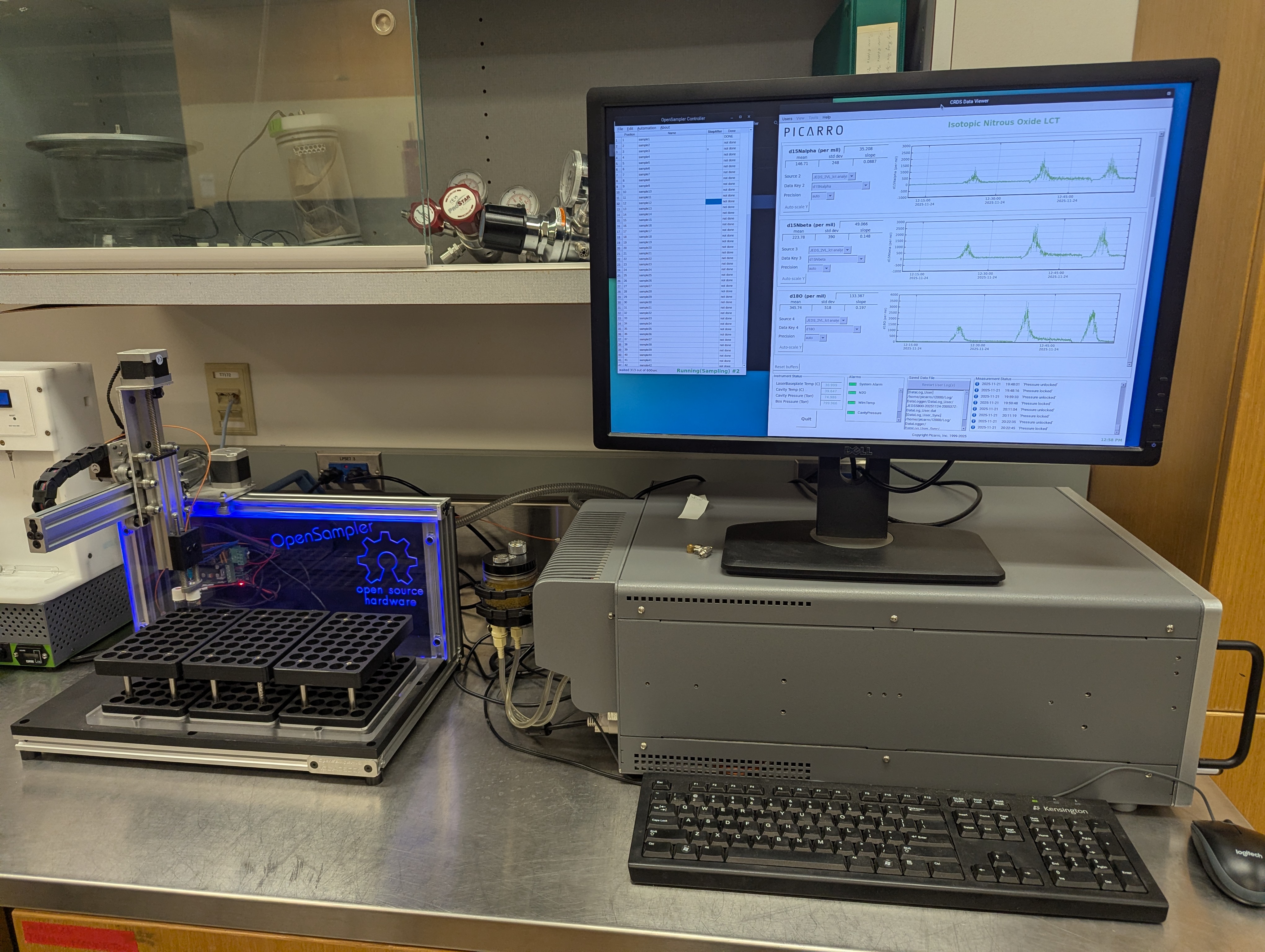
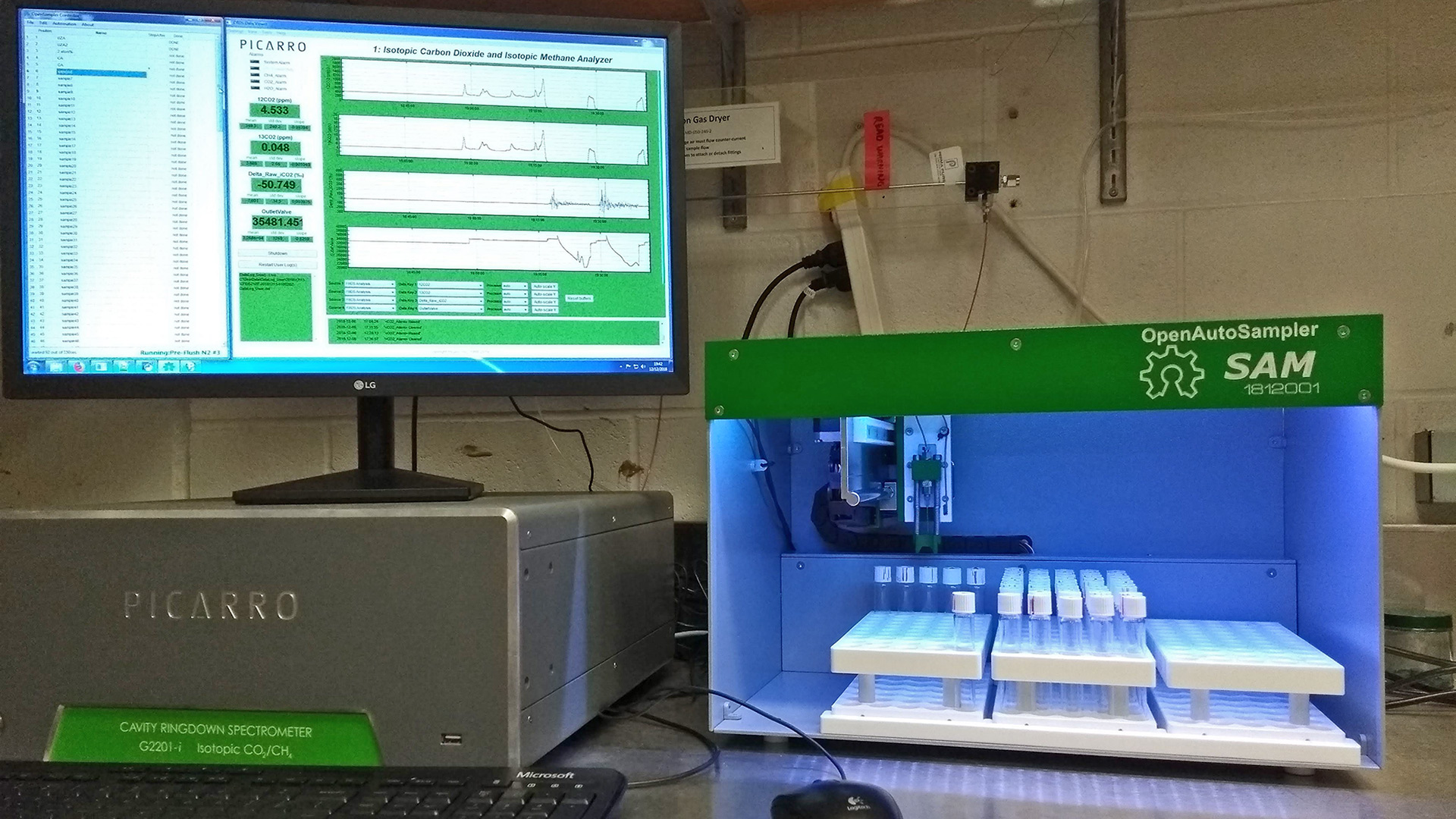
SAM was developed as the premier high-throughput autosampler for Picarro CRDS analyzers, allowing 24/7 automated analysis of gas samples stored in 12 mL Exetainer vials. Engineered specifically for discrete sample introduction to Cavity Ring-Down Spectroscopy (CRDS) and laser trace gas analyzers, SAM delivers high-throughput 150-vial capacity with continuous non-stop operation, setting the benchmark for precision greenhouse gas and stable isotope measurement.

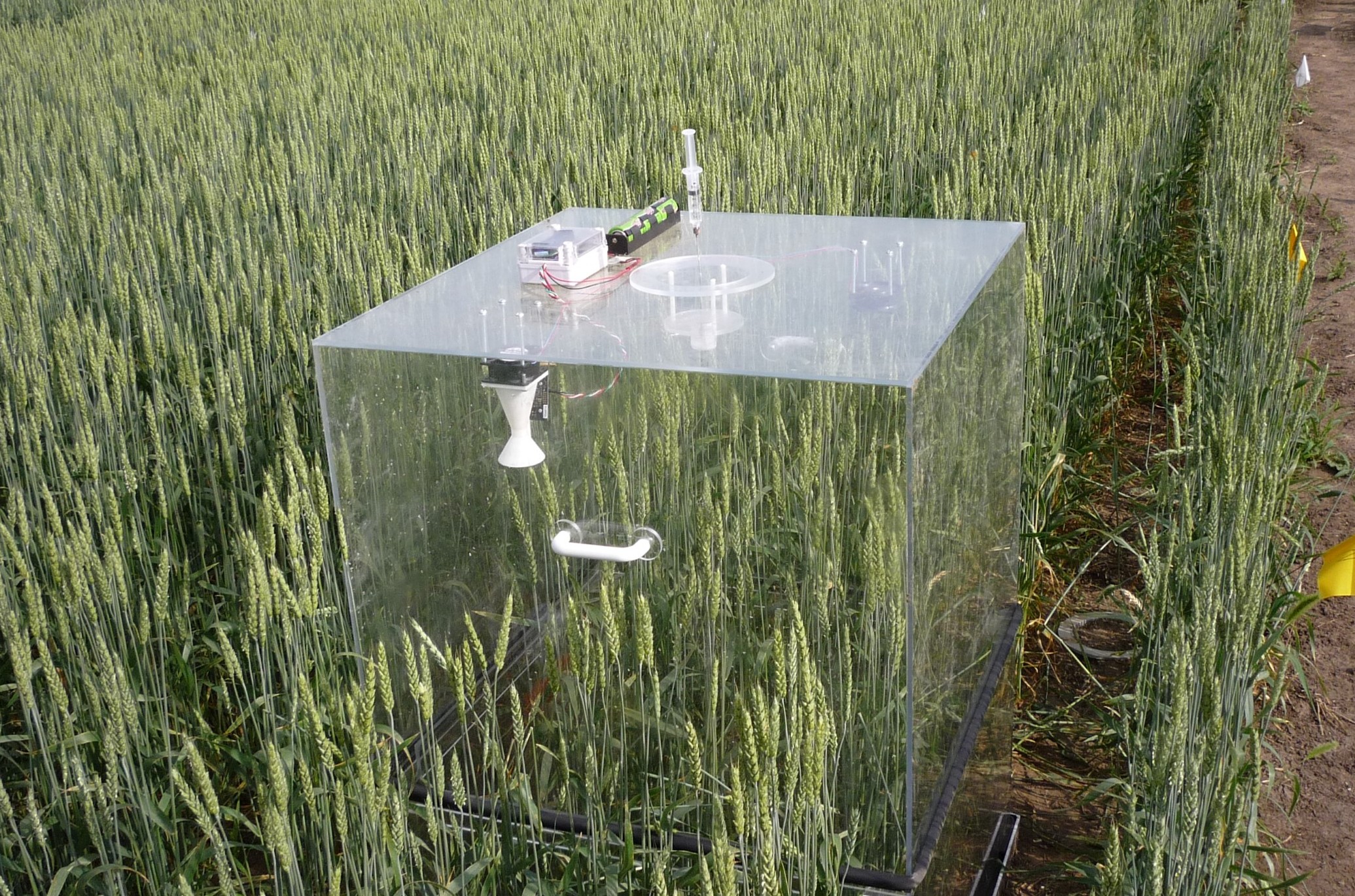
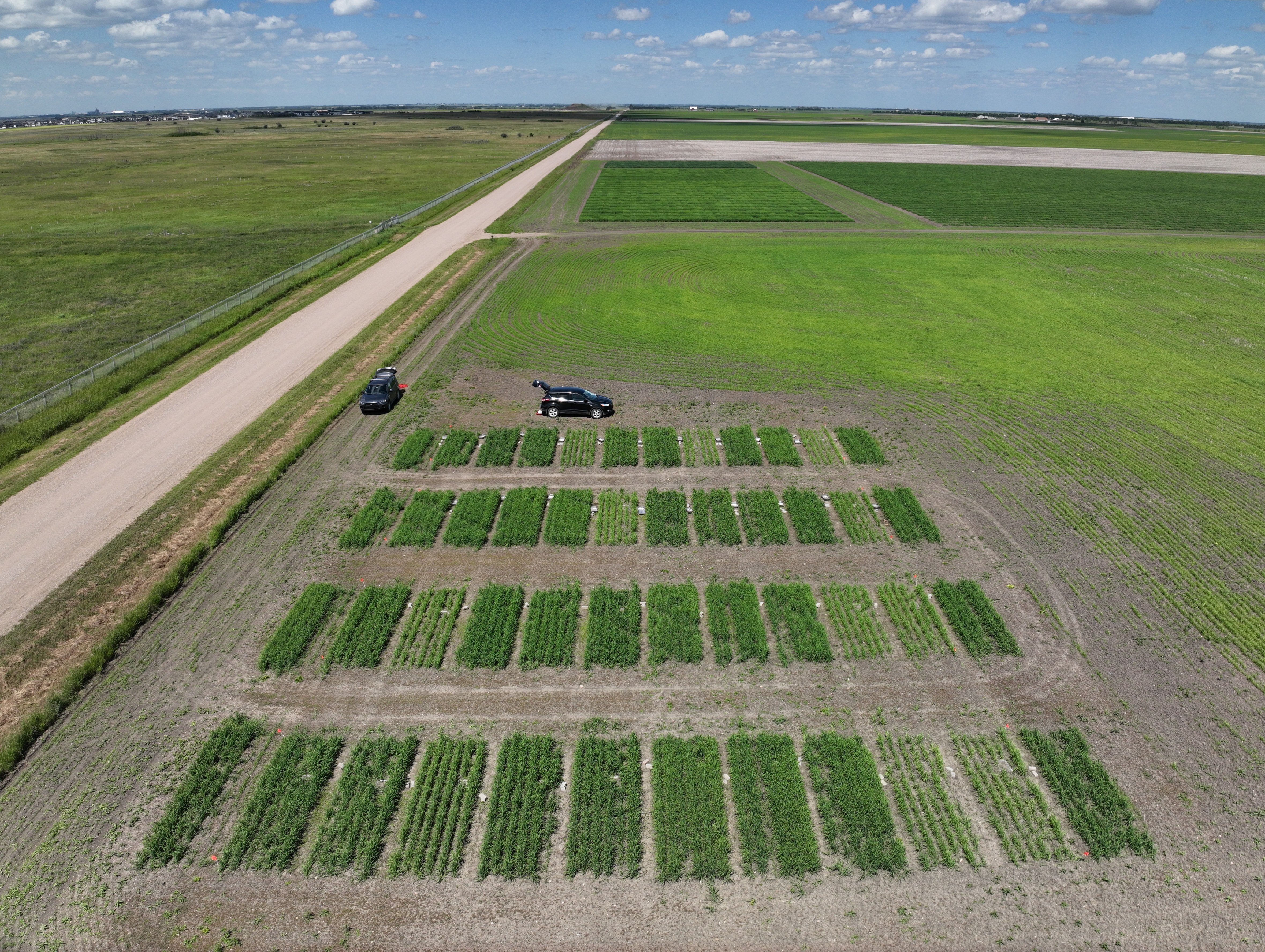
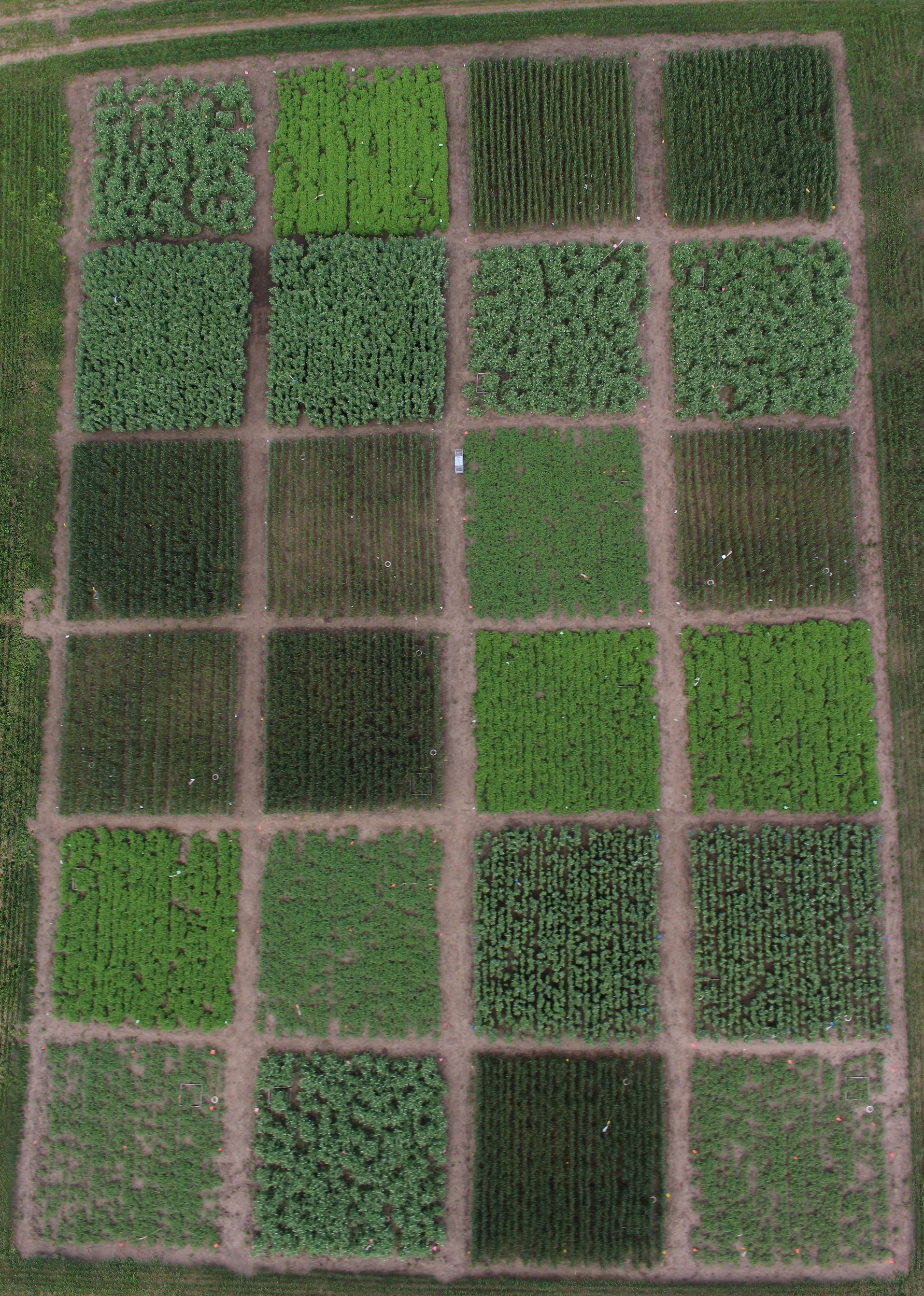
24-Treatment Agronomic Research Plots
24-Plot Research Trial • δ13C-CO2 & 15N-N2O

Zero SSIM/SSIM2 Needed

Connects straight to the 1/4" inlet of your analyzer. Eliminates the need for Picarro's costly Small Sample Isotope Module (saving $15,000–$30,000+) while delivering matching or superior analytical precision.

  • Direct 1/4" connection to analyzer inlet
  • Equal or superior isotopic repeatability
  • No costly proprietary manufacturer locks

Continuous 24/7 Unattended Operation

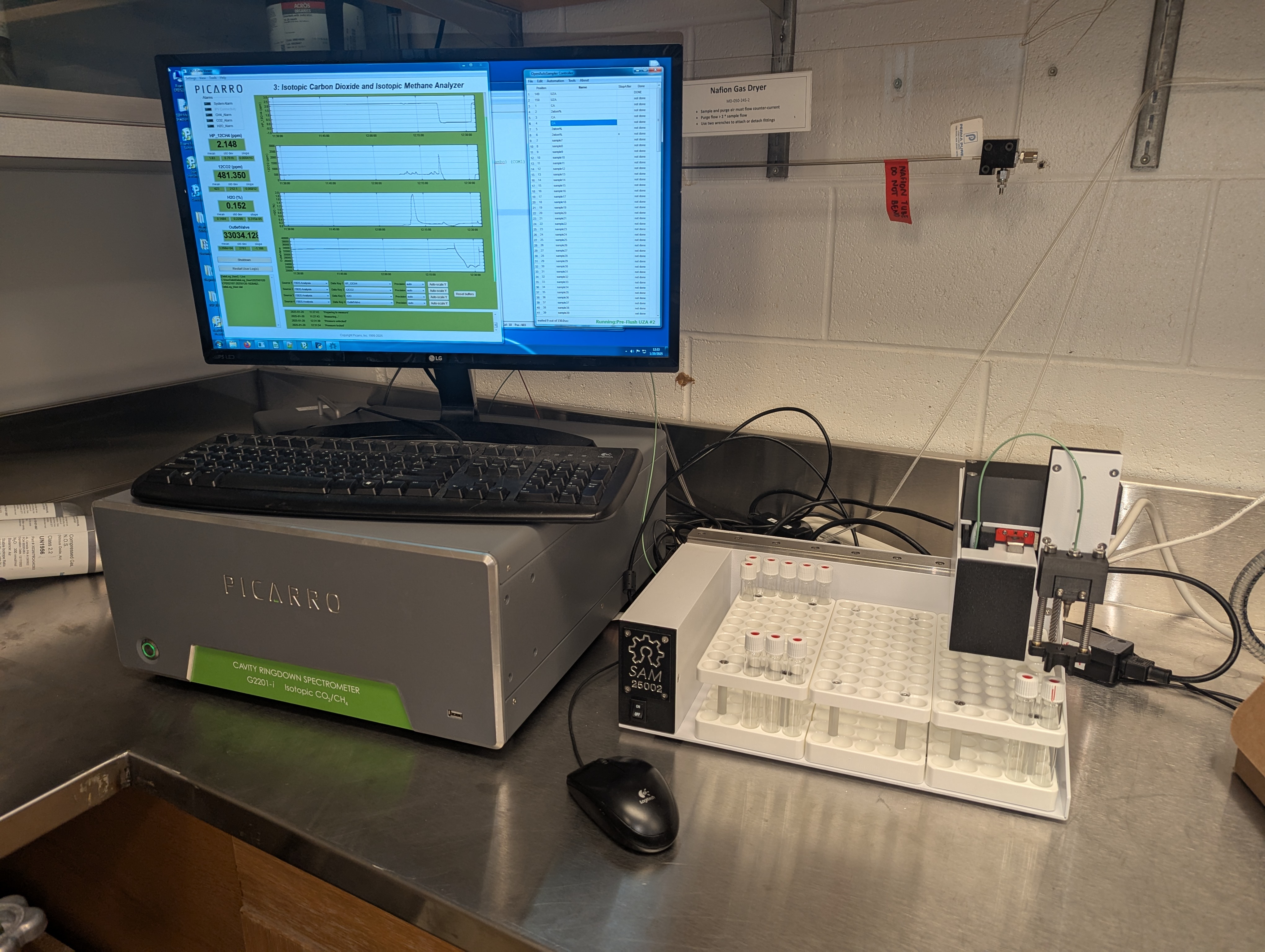
Engineered as the first 150-position discrete autosampler allowing continuous 24/7 automated analysis of 12 mL Exetainer vials. Unlike closed carousel systems that require halting runs, SAM's open-bed architecture enables hot-swappable continuous loading — vials can be added, replaced, or prioritized mid-run for truly autonomous laboratory workflows.

  • High-throughput 150-vial open-bed tray
  • Hot-swappable batches during live sequences
  • Autonomous unattended overnight & weekend runs

100% Open Source Ecosystem

Full transparency and control over your research. Built on proven open-hardware motion electronics (Einsy RAMBo) and extensible Python scripts for instrument control and automated data reduction.

  • Transparent Python control scripts
  • Automated data extraction & charting
  • Open CAD design files and standard hardware components

Low-Cost Standard Consumables

Uses industry-standard 12 mL Labco Exetainer® vials (and optional 5.9 mL) with standard disposable syringe needles. Zero proprietary septa, custom syringes, or consumable service kits.

  • Standard double-wadded Labco Exetainers
  • Universal disposable stainless needles (swapped in 30s)
  • Inexpensive operation per analyzed sample

Precision Laser Spectroscopy Over GC

Replaces conventional Gas Chromatography (GC) without expensive helium carrier gases, thermal columns, or manual peak baselining. Enjoy continuous sub-ppb optical sensitivity.

  • Uses inexpensive Ultra Zero Air (or N2) carrier
  • Simultaneous concentration & stable isotope measurement
  • Faster turnaround: 8 to 15 min per discrete vial

Field & Benchtop Ruggedness

Engineered with a rigid powder-coated aluminum frame, precision-ground linear motion guides, and compact 43 × 29 × 30 cm footprint (8 kg) that fits readily into any laboratory or field station.

  • Rigid structural chassis resisting bench vibrations
  • Universal 100–240 VAC power brick (24V DC 2.5A)
  • Proven in over 12 years of active academic research

Method Comparison Matrix

How SAM compares to traditional discrete gas sample introduction methods

Feature / Parameter OpenAutosampler SAM Picarro SSIM2 / SAGE Gas Chromatograph (GC) Manual Syringe Injection
Sample Capacity 150 Positions (Continuous) 1 or batch rack ~50–100 autosampler rack 1 by 1 (manual operator)
24/7 Continuous Loading Yes (150-vial open tray, hot-swappable mid-run) SSIM2: No (Single) • SAGE: Batch tray Limited N/A (Full-time operator)
Capital Cost Low / Open Source High ($25,000–$45,000+ proprietary) High ($40,000–$80,000+) Low (High labor costs)
Carrier Gas Ultra Zero Air or N2 Ultra Zero Air / N2 Helium / Special Carrier None / Manual dilution
Carryover / Memory < 0.5% (Pre/post-purge) < 0.5% – 1% 0.5% – 2% column bleed Variable (> 2%)
Isotope Precision Native Analyzer Limit Native Analyzer Limit Requires IRMS coupling Operator dependent
Software & Code 100% Open Python Proprietary Closed Proprietary Closed N/A

How SAM Works & Key Features

A four-stage automated pneumatic cycle that delivers discrete gas samples to optical measurement cavities with zero cross-contamination.

01
Precision Positioning

Needle Alignment

The 3-axis motorized gantry navigates the sampling needle directly above the designated 12 mL Exetainer vial in the 150-position tray without piercing the septum.

02
120 – 180 Seconds

Pre-Flushing (Carrier Gas)

An integrated fast solenoid opens, delivering regulated Ultra Zero Air (UZA) backwards through the needle and forward into the analyzer, sweeping out residual trace gases and establishing a pristine baseline.

03
5 – 15 Minutes

Sample Introduction

The UZA solenoid seals, and the needle descends through the double-wadded septum. Slightly over-pressurized vial gas (30–35 mL) flows smoothly into the analyzer's optical cavity for steady-state spectroscopy.

04
~90 Seconds

Post-Flush & Laser Tuning

The needle retracts from the septum. Reference carrier air sweeps the cavity, clearing sample residue, reducing carryover to < 0.5%, and allowing the analyzer lasers to re-tune their wavelength lock.

Einsy RAMBo Industrial Controller

Driven by proven open-hardware motion electronics utilized in millions of precision 3D printers worldwide.

  • ✓ High-reliability open architecture with USB 2.0 serial control
  • ✓ Micro-stepping precision for exact septum alignment
  • ✓ Direct 24V solenoid valve drive with active flyback suppression

In-Line Nafion™ Moisture Drying

Compatible with in-line Perma Pure Nafion™ membrane dryers to strip water vapor from humid samples with counter-current dry purge gas before entering the analyzer.

  • ✓ Protects delicate cavity mirrors from condensation damage
  • ✓ Eliminates spectroscopic H2O line-broadening interference

Catalytic Pt/Al2O3 & Soda Lime Scrubbing

Compatible with specialized in-line scrubbing filtration specifically developed for nitrous oxide isotopic analysis (δ15N, δ18O) on Picarro PI5131-i / G5102-i instruments.

  • ✓ Platinum-on-alumina catalyzes carbon monoxide (CO) into CO2
  • ✓ Soda lime cartridge scrubs high background CO2 (>1000 ppm)
  • ✓ Prevents spectral overlap and bias from vial septum off-gassing

Python Automation & Data Tools

Native Python control scripts run directly on the analyzer or any connected Windows/Linux PC, communicating over a standard COM port.

  • ✓ Flexible run configurations: customize purge & sampling durations
  • ✓ Automated post-run extraction of isotope delta values & concentrations
  • ✓ Direct CSV exports ready for publication figures and statistical modeling

Technical Specifications

Full hardware, motion, analytical performance, and utility requirements for the SAM gas autosampler.

Frame & Chassis Rigid powder-coated industrial aluminum frame with precision-machined brackets Robust benchtop design
Electronics Controller Einsy RAMBo 1.1 / 1.2 (Open-source motion control board) Trinamic TMC2130 drivers
Communication Interface USB 2.0 (Virtual COM Port, standard FTDI/CDC serial) Universal Windows / Linux
Power Supply External 24V DC 2.5A power brick (Universal 100–240 VAC, 50/60 Hz input) < 60W power draw
Dimensions (W × D × H) 43 × 29 × 30 cm (16.9 × 11.4 × 11.8 in) Compact lab footprint
Weight 8.0 kg (17.6 lbs) Easily relocatable
Sample Consumables Standard disposable syringe needles (no proprietary components required) Swappable in 30 sec
Sample Rack Capacity 150 sample vial positions (standard rack) Continuous loading
Compatible Vials 12 mL Labco Exetainer® vials (double-wadded cap); optional 5.9 mL vials Standard laboratory vial
Optimal Sample Filling 30 – 35 mL of discrete gas sample injected into 12 mL vial (slight overpressure) Ensures zero ambient leak
Sample Analysis Time ~15 minutes standard (configurable down to 8 min without performance loss) Software configurable
Carryover Between Samples Less than 0.5% of sample concentration Active pre/post purge
Concentration Accuracy 98% / 2% dilution (with 35 mL sample); 95% / 5% dilution (with 25 mL sample) Linear across ranges
Isotopic Accuracy (δ13C, δ15N, δ18O) Identical to manufacturer CRDS analyzer baseline specifications Zero isotopic fractionation
Carrier / Purge Gas Cylinder of Ultra Zero Air (UZA) or high-purity Nitrogen (N2) Zero hydrocarbons & CO2
Carrier Pressure Regulation Regulated strictly to 5 PSI (0.3 BAR). A 0–20 PSI precision regulator is required. Do NOT use 0–100 PSI
Tubing & Fluidic Connections 1/8" and 1/16" Swagelok adapters & PTFE/stainless tubing included for 1/4" analyzer inlet All fittings included
Sample Conditioning (Optional) Perma Pure MD-050-12 Nafion™ dryer; in-line Pt/Al2O3 + Soda Lime scrubber for N2O Protects cavity mirrors
Operating Environment 15°C to 30°C, 10–85% RH non-condensing Indoor lab or mobile van

Compatible Analyzers & Lab Applications

SAM integrates seamlessly with the world's premier cavity ring-down spectrometers and laser trace gas instruments.

CRDS • Carbon Isotopes

Picarro G2201-i

Cavity Ring-Down Spectrometer

CO2 CH4 δ13C-CO2 δ13C-CH4

The benchmark analyzer for carbon cycle research. SAM feeds discrete headspace samples to quantify microbial methanogenesis, soil respiration, and fossil vs. biogenic source partitioning with < 0.1‰ δ13C precision.

Analyzer Flow Rate: ~25 – 35 sccm
Integration: Direct 1/4" Inlet (Replaces SSIM2)
CRDS • 5-Gas Multi-Species

Picarro G2508 / G2509

Simultaneous 5-Gas Greenhouse Gas Analyzer

N2O CH4 CO2 NH3 H2O

Measures 5 greenhouse gases simultaneously. High-flow validation (>200 sccm) demonstrated by Picarro Inc. and university partners showcases remarkable repeatability (0.08 ppm CO2, 0.01 ppm CH4, 0.003 ppm N2O).

Analyzer Flow Rate: ~220 – 250 sccm
Integration: Direct Discrete Sample Line
CRDS • Nitrogen Isotopomers

Picarro PI5131-i & G5102-i

Nitrous Oxide Isotopomer & Site-Specific Analyzer

N2O δ15Nbulk δ15Nα δ15Nβ δ18O

Site-specific N2O tracking for distinguishing nitrification from denitrification pathways. Coupled with SAM's in-line CO scrubber for interference-free isotopic discrimination.

Analyzer Flow Rate: ~25 sccm
In-Line Conditioning: Pt/Al2O3 + Soda Lime + Nafion
CRDS • Broad Compatibility

Other Picarro Gas Analyzers

Compatible with the broader family of Picarro CRDS trace gas and isotope spectrometers.

CO CO2 CH4 C2H6 N2O δ13C-CO2 δ15N-N2O δ13C-CH4

SAM readily interfaces with other Picarro models (such as G2131-i, G2204, G2210-i, G2301, and G2401). Whether analyzing multi-species emissions, volatile organics, or custom isotopic ratios, SAM delivers steady-state discrete sample flow with automated line purging.

Analyzer Flow Rate: Configurable (~25 – 250 sccm)
Data Tools: Customized Python scripts for your application
Pilot Evaluation: Run a risk-free pilot to confirm results before you purchase
Open Architecture

Custom Research Spectrometers

Specialized Lab & Microcosm Setups

Trace Gases Incubations Static Chambers

Because SAM's motion firmware and host software are 100% open source, university researchers frequently adapt the gantry to custom vial geometries, multi-needle arrays, and micro-volume chambers.

Vial Geometry: 5.9 mL, 12 mL, or custom racks
Firmware: RepRap / Marlin compliant

Target Laboratory & Field Research Applications

From aquatic dissolved gas dynamics to agricultural nutrient stewardship and landscape budgets

Dissolved CO2 and CH4 in Lakes and Streams Lakes & Fluvial Networks

Dissolved CO2 & CH4 in Lakes & Streams

Quantifying dissolved greenhouse gas concentrations (pCO2, pCH4) and carbon evasion across lakes, peatland headwaters, and subarctic fluvial networks. Standard syringe headspace equilibration into 12 mL Exetainers pairs with SAM to deliver high-throughput automated analysis and precise carbon isotope ratios (δ13C-CO2 and δ13C-CH4), resolving aquatic-terrestrial carbon coupling as documented in JGR Biogeosciences (Taillardat et al., 2022; Saarela et al., 2026).

Agricultural Plot Trials and Nutrient Cycling Nutrient Stewardship

Agricultural Plot Trials & Nutrient Cycling

Multi-treatment crop rotation trials measuring N2O, CH4, and CO2 emission factors. SAM provides rapid 24/7 turnaround for hundreds of discrete Exetainer vials across replicated fertilizer and soil amendment blocks.

Study the carbon cycle by using 13C labelling Canopy & Respiration Kinetics

Carbon Cycle Studies Using 13C Labelling

Discrete gas sampling of soil fluxes pairs seamlessly with high-precision Picarro CRDS analyzers for δ13C-CO2 and δ18O.

Landscape-Scale Soil GHG and Carbon Budgets Landscape-Scale Monitoring

Landscape-Scale GHG & Carbon Budgets

Regional-scale biogeochemical monitoring capturing spatial heterogeneity across hummocky terrain, wetlands, and prairies. High 150-vial capacity ensures robust statistical power across complex soil catenas.

Laboratory Throughput Calculator

Estimate your laboratory's daily and weekly sample processing capacity with SAM's continuous-loading automation.

8 min (High Flow) 14 min (Isotopes) 20 min (Extended)
8h (Workday) 16h (Extended) 24h (Non-stop)
120 Samples / Day
840 Samples / Week
0.8 150-Vial Trays / Day
30.0 Hours per 150 Tray

*Calculated with automated 150s pre-flush and 90s post-flush cycles. Continuous loading allows uninterrupted runs without halting the analyzer.

Peer-Reviewed Publications Referencing SAM

Peer-reviewed journal articles and scientific studies validating and deploying OpenAutosampler / SAM for high-precision greenhouse gas and stable isotope analysis.

JGR Biogeosciences (AGU) 2022 Peer-Reviewed Journal

Carbon Dioxide and Methane Dynamics in a Peatland Headwater Stream: Origins, Pathways, and Evasion

Pierre Taillardat, Pascal Bodmer, Charles P. Deblois, Antonin Prijac, Laure Gandois, Alain Tremblay, & Michelle Garneau

Journal of Geophysical Research: Biogeosciences, 127(7), e2022JG006855 • American Geophysical Union (AGU) • DOI: 10.1029/2022JG006855

Conducted high-resolution spatial-temporal characterization of carbon evasion and fluvial exports across peatland headwater networks in Quebec, Canada. The authors explicitly document using a "cavity ring-down spectroscopy (CRDS) analyzer (G2201-i, Picarro Inc, USA) equipped with a gas autosampler (SAM, OpenAutosampler Inc, Canada) to determine pCO2, pCH4, δ13C-CO2, and δ13C-CH4" from discrete headspace Exetainers with sub-permil accuracy.

Biogeosciences (Copernicus) 2024 Peer-Reviewed Journal

Seasonal Controls on Methane Flux Components in a Boreal Peatland — Combining Plant Removal and Stable Isotope Analyses

Katharina Jentzsch, Elisa Männistö, Maija E. Marushchak, Aino Korrensalo, Lona van Delden, Eeva-Stiina Tuittila, Christian Knoblauch, & Claire C. Treat

Biogeosciences, EGUsphere • Copernicus Publications • DOI: 10.5194/egusphere-2023-3098

Resolved plant-mediated vs. diffusion-driven CH4 emission pathways in an eastern Finnish boreal fen across multiple growing seasons. The authors explicitly cite their analytical setup as "CRDS; Picarro G2201-i Isotopic Analyzer + autosampler SAM" to achieve high-frequency, unattended discrete vial analysis of δ13C-CH4 signatures without isotopic fractionation.

Genes (MDPI) 2023 Peer-Reviewed Journal

Deep Isolated Aquifer Brines Harbor Atypical Halophilic Microbial Communities in Quebec, Canada

Jean-Christophe Gagnon, Samuel Beauregard-Tousignant, Jean-Sébastien Marcil, & Cassandre Sara Lazar

Genes, 14(8), 1529 • Section: Microbial Genetics & Genomics • DOI: 10.3390/genes14081529

Investigated isolated deep saline groundwater aquifers and subsurface microbial methanogenesis. Discrete groundwater isotopic signatures (δ13C-CO2, δ13C-CH4) were quantified using a "Picarro G2201-i Analyzer coupled with an autosampler (SAM1812001, OpenAutoSampler)", demonstrating seamless automated sample introduction from 12 mL Exetainers with zero atmospheric contamination.

JGR Biogeosciences (AGU) 2026 Peer-Reviewed Journal

Land Cover and Hydrology Regulate Riverine Carbon Emissions From Subarctic Catchments

T. Saarela, et al.

Journal of Geophysical Research: Biogeosciences, e2025JG009061 • American Geophysical Union • DOI: 10.1029/2025JG009061

Investigated riverine greenhouse gas emissions and aquatic-terrestrial carbon coupling across high-latitude catchments. Headspace equilibration techniques coupled with discrete Cavity Ring-Down Spectroscopy allowed automated, high-density analysis of seasonal carbon fluxes and evasion rates across diverse hydrological conditions.

Discover Soil (Springer Nature) 2025 Peer-Reviewed Journal

Soil CO2 and CH4 Response to Experimental Warming Under Various Tree Species Compositions in a Temperate Forest

Sharlène Laberge, et al.

Discover Soil, 2, Article 45 • Springer Nature • DOI: 10.1007/s44378-025-00045-4

Evaluated forest soil greenhouse gas dynamics under experimental in-situ soil heating manipulations in mixed temperate forest stands. Employs high-throughput discrete Exetainer gas autosampling to conduct continuous high-frequency batch soil incubation and flux chamber measurements.

Open Science Repository GitHub Open Source Project

OpenSampler — The Original Open-Source Discrete Gas Autosampler Design

Frank Krijnen (Lead Developer)

github.com/north90/OpenSampler • Hardware: Open Source • Software: Python & Marlin

The pioneering open-source discrete gas autosampler repository. Contains the mechanical CAD models, 3D printing STL files, RAMBo motion controller firmware configurations, and Python host automation scripts that established 24/7 automated Exetainer analysis for Cavity Ring-Down Spectrometers.
Contact & Laboratory Inquiries

Interested in acquiring a SAM autosampler, custom rack geometries, pilot evaluations, or lab integration assistance? Get in touch directly via email.

Frequently Asked Questions

What vials and sample preparation provide the best results?

Standard 12 mL Labco Exetainer® vials with double-wadded caps (5.9 mL vials are also supported). For optimal precision, inject 30–35 mL of discrete gas sample into the vial to generate slight positive headspace pressure, completely preventing ambient atmosphere infiltration.

How does SAM compare to discrete autosamplers like Picarro's Sage™ (A0344)?

SAM pioneered 150-position 12 mL Exetainer automation for CRDS analyzers. While systems like Sage (A0344) run discrete Exetainers in fixed batches, SAM's open-bed gantry allows continuous hot-swapping and addition of vials mid-run without stopping sequences. Furthermore, SAM utilizes 100% open Python software, standard disposable needles (no proprietary consumables), and connects directly to standard 1/4" analyzer inlets without requiring an SSIM2 module.

Do I need a Picarro SSIM or SSIM2 module to interface SAM?

No. SAM connects directly to your analyzer's 1/4" inlet (or via standard Swagelok fittings) using active pneumatic solenoid valves and regulated carrier gas. This eliminates the requirement for expensive Small Sample Isotope Modules (SSIM/SSIM2), saving significant capital expense while achieving equal or superior analytical precision.

Can SAM measure both GHG concentrations and stable isotopes simultaneously?

Yes. SAM delivers stable, steady-state discrete gas streams into the optical cavity for 8 to 15 minutes, allowing Cavity Ring-Down Spectrometers (such as Picarro G2201-i, G2508, PI5131-i) to attain full optical precision for CO2, CH4, N2O, δ13C, δ15N, and δ18O with < 0.5% sample-to-sample carryover.

Can Labco factory pre-evacuated vials be used?

No. Factory pre-evacuated vials are not recommended because septa can develop variable vacuum leaks during shipping and storage. Instead, flush vials or inject positive overpressure with your discrete gas sample immediately prior to analysis.

What carrier gas regulator is required?

You must regulate Ultra Zero Air (or high-purity N2) strictly to 5 PSI (0.3 BAR). High-pressure 0–100 PSI regulators are dangerous for the analyzer; use a dedicated 0–20 PSI (or 0–1.5 BAR) precision regulator.

Where can I access the open-source CAD design and Python scripts?

All design files, software sources, and firmware are supplied with SAM, and the open-source project is available at github.com/north90/OpenSampler. For laboratories seeking fully assembled, calibrated turn-key units or custom engineering, contact us directly at info@openautosampler.com.